
Co-operation Agreement between Alberta and Canada
Consultation has concluded

The Impact Assessment Agency of Canada (IAAC) is seeking feedback on a draft co-operation agreement with Alberta.
When a proposed project requires an assessment by both the federal and provincial governments, Canada is committed to working with provinces to achieve “one project, one review.” Under this approach, federal and provincial governments work together to meet shared and respective responsibilities to protect the environment and respect Indigenous rights with the goal of a single assessment for a project.
Co-operation agreements outline commitments and principles to guide how the federal and provincial governments will work together to eliminate duplication and streamline assessmentContinue reading
The Impact Assessment Agency of Canada (IAAC) is seeking feedback on a draft co-operation agreement with Alberta.
When a proposed project requires an assessment by both the federal and provincial governments, Canada is committed to working with provinces to achieve “one project, one review.” Under this approach, federal and provincial governments work together to meet shared and respective responsibilities to protect the environment and respect Indigenous rights with the goal of a single assessment for a project.
Co-operation agreements outline commitments and principles to guide how the federal and provincial governments will work together to eliminate duplication and streamline assessment processes on a project-by-project basis to enable “one project, one review.”
Have your say
We are seeking feedback on the draft co-operation agreement with Alberta.
The comment period is your chance to review the draft co-operation agreement and submit feedback. The comment period starts March 6, 2026, and ends March 27, 2026, 11:59 p.m. ET.
To provide a comment or upload a submission, please register or sign in.
Comments and submissions will be made public in the official language in which they are received. You can also consult comments and submissions published on the French page.
Comments received will inform the final co-operation agreement, including its implementation.
At a broader-level, IAAC sought comments last Fall 2025 on a consultation paper which outlines Canada’s proposed approach to working with provinces on the assessment of major projects, with the goal of "one project, one review."
Visit the Let’s Talk Impact Assessment webpage to review the consultation paper on the proposed approach to working with provinces and view comments received. While the comment period on the paper is now closed, comments received on the paper continue to inform the drafting and finalizing of agreements and their implementation.
Comments submitted by March 27, 2026, 11:59 p.m. ET will be considered for the co-operation agreement with Alberta.
- Read the Draft Co-operation Agreement on Environmental and Impact Assessment Between Alberta and Canada
- Upload a submission
- Provide a comment
Provide a comment
Send us your comments or submissions at intergovernmentalaffairs-affairesintergouvernementales@iaac-aeic.gc.ca.
Thank you for taking the time to share your comments. Please see our Privacy Policy for how we treat the information collected on this website.
The Impact Assessment Agency of Canada
-
Born in Alberta
by Tracy Hudsin, 7 months agoI was born in Alberta and I respect oil and gas but I also respect the land the trees and the indigenous lands. I do not trust Danielle Smith to properly follow environmental regulations considering she seems to put projects ahead of common Sense and respect for the land, the animals and the environment which is a huge part of Alberta I shouldn't be taking advantage of. I really think she needs to be watched on her ability to skip red tape cuz that's going to just cost us lots of money later if we have to go back and... Continue reading
I was born in Alberta and I respect oil and gas but I also respect the land the trees and the indigenous lands. I do not trust Danielle Smith to properly follow environmental regulations considering she seems to put projects ahead of common Sense and respect for the land, the animals and the environment which is a huge part of Alberta I shouldn't be taking advantage of. I really think she needs to be watched on her ability to skip red tape cuz that's going to just cost us lots of money later if we have to go back and repair or pay out damages when it could have been done right the first time.
-
Slow Down and see the bigger picture.
by Sarah from Ontario, 7 months agoAccelerating industrial approvals at the expense of environmental oversight is a dangerous mistake. Between reckless spending and 'separation' distractions, the current UCP government has proven it cannot be trusted to manage Alberta’s dwindling water resources. Adding data centers to a province already in a water deficit is a recipe for disaster. Alberta’s assessments don’t meet the Federal Standard,
We need to stop pretending that carbon capture is anything more than a scheme to delay real action, and attempt to capitalize on global degradation, while leaving taxpayers with a 'big mess' akin to the orphaned wells and tailings ponds. The real... Continue reading
Accelerating industrial approvals at the expense of environmental oversight is a dangerous mistake. Between reckless spending and 'separation' distractions, the current UCP government has proven it cannot be trusted to manage Alberta’s dwindling water resources. Adding data centers to a province already in a water deficit is a recipe for disaster. Alberta’s assessments don’t meet the Federal Standard,
We need to stop pretending that carbon capture is anything more than a scheme to delay real action, and attempt to capitalize on global degradation, while leaving taxpayers with a 'big mess' akin to the orphaned wells and tailings ponds. The real authority over these lands should rest with Treaty Holders. They are the only ones prioritizing the long-term health of our waters and climate. Economic growth is meaningless if we can't breathe the air or drink the water. It is time for Indigenous Approvals first! And impact assessments that meet the federal standards!
-
Cumulative Effects are out of control in Alberta
by Melanie Daniels B.Sc., P.Biol., 7 months agoAlberta’s cumulative‑effects crisis is not theoretical, it is lived reality on the land, a reality Indigenous peoples in Alberta are living daily. Watersheds are over‑allocated, airsheds exceed thresholds, species are in decline, and regional plans remain incomplete or unenforced. For decades, Alberta has relied on a project‑by‑project environmental assessment (EA) system that is structurally incapable of managing cumulative effects at the landscape scale.
The draft Co‑operation Agreement Between Alberta and Canada proposes that Canada rely on Alberta’s EA and regulatory processes “to address adverse effects within federal jurisdiction” for projects primarily under provincial authority (Clause 1(1)) and avoid “duplicative decision‑making”... Continue reading
Alberta’s cumulative‑effects crisis is not theoretical, it is lived reality on the land, a reality Indigenous peoples in Alberta are living daily. Watersheds are over‑allocated, airsheds exceed thresholds, species are in decline, and regional plans remain incomplete or unenforced. For decades, Alberta has relied on a project‑by‑project environmental assessment (EA) system that is structurally incapable of managing cumulative effects at the landscape scale.
The draft Co‑operation Agreement Between Alberta and Canada proposes that Canada rely on Alberta’s EA and regulatory processes “to address adverse effects within federal jurisdiction” for projects primarily under provincial authority (Clause 1(1)) and avoid “duplicative decision‑making” by deferring to Alberta where Alberta asserts it can address federal effects (Clause 3(1)).
This approach is fundamentally incompatible with the reality of cumulative effects in Alberta. A system that has failed to manage cumulative impacts cannot be the foundation for federal reliance.
1. Alberta’s Cumulative‑Effects Problem Is Structural, Not Incidental
1.1 Project‑by‑project assessment cannot manage cumulative effects
Alberta’s EA regime under the Environmental Protection and Enhancement Act (EPEA) evaluates projects in isolation. It does not:
- assess regional carrying capacity
- integrate land‑use thresholds
- evaluate cross‑sector interactions
- incorporate climate‑related cumulative effects
- require sustainability‑based decision‑making
- consider Indigenous knowledge, Indigenous land use requirements or Indigenous rights
This is not a matter of poor implementation, it is a design flaw, one that appears intentional.
1.2 Alberta’s own policy documents acknowledge failure
Alberta’s Land‑use Framework explicitly states that project‑by‑project assessment “has not worked as well” for cumulative effects. Yet the province continues to rely on this model, and regional plans remain incomplete, outdated, or unenforced. Since the United Conservative Party was elected Land Use Planning ceased in Alberta, funding to support First Nation and Métis engagement was discontinued, Indigenous voices have not been heard since 2017.
1.3 Watersheds and airsheds are already over‑allocated
Across Alberta:
- Water allocations exceed natural supply in multiple basins
- Airshed management zones exceed or approach critical thresholds. The Government of Alberta directed the Alberta Energy Regulator, a supposed arms length regulator, to quietly update their Directive 60 to permit flaring exceedances
- Species at risk (caribou, bull trout, Athabasca rainbow trout) face habitat loss far beyond recovery targets
These are cumulative‑effects failures relating to the systems, not individual project failures.
2. The Draft Agreement Entrenches a System That Cannot Manage Cumulative Effects
2.1 Clause 1(1): Federal reliance on Alberta’s processes
The agreement commits Canada to rely on Alberta’s EA and regulatory processes to address federal‑effects categories, including cumulative effects. This is untenable.
Alberta’s EA regime is not designed to assess cumulative effects at the scale required by federal law.2.2 Clause 3(1): Avoiding “duplicative decision‑making”
This clause frames federal oversight as duplication. In reality, federal assessment is the only venue where cumulative effects, climate obligations, and Indigenous rights are systematically integrated. Eliminating federal review removes the only process capable of addressing cumulative effects meaningfully.
2.3 Clause 6(1): Deference to provincial conditions
This clause states that federal conditions will defer to provincial conditions where provincial tools exist. In cumulative‑effects contexts, provincial tools are often:
- weaker
- unenforced
- incomplete
- or entirely absent
Deference here means lowering federal standards to match provincial gaps.
2.4 Clause 7(1): Delegation of Indigenous consultation
Cumulative effects disproportionately impact Indigenous Nations whose territories have already absorbed generations of development pressure. Yet the agreement proposes that Canada “recognize Alberta as best placed to consult with Indigenous Peoples” for provincially regulated projects. This is categorically false! This is inconsistent with:
- Canada’s constitutional obligations under s.91(24)
- the Honour of the Crown
- UNDRIP commitments
A province that has not managed cumulative effects cannot be the primary vehicle for consultation on cumulative impacts.
3. Why Federal Oversight Is Essential for Cumulative‑Effects Management
3.1 Federal jurisdiction is directly engaged
Cumulative effects in Alberta affect:
- fisheries
- migratory birds
- interprovincial waters
- species at risk
- climate obligations
- Indigenous rights
- Neighbouring jurisdictions such as Saskatchewan and NWT
These are federal responsibilities. They cannot be delegated to a provincial system that is not designed to protect them.
3.2 The Impact Assessment Act is built for cumulative effects
The IAA requires:
- regional and strategic assessments
- sustainability‑based decision‑making
- climate analysis
- Indigenous‑rights considerations
- interjurisdictional effects analysis
Alberta’s EA regime does not.
3.3 Federal withdrawal would worsen cumulative‑effects conditions
If Canada defers to Alberta’s processes:
- cumulative impacts will continue to accumulate unchecked
- regional thresholds will remain unenforced
- species recovery targets will remain unmet
- water and air quality will continue to degrade
- Indigenous Nations will bear disproportionate impacts
This is not efficiency, it is erosion of environmental governance and puts the health and wellbeing of Albertan’s and Canadian’s at risk.
4. Recommendations
To ensure cumulative effects are meaningfully addressed, the following amendments are essential:
4.1 Remove automatic deference clauses (1(1), 3(1), 6(1), 7(1))
Federal oversight must remain independent and robust.
4.2 Require a cumulative‑effects equivalency analysis
Before relying on Alberta’s process, Canada must demonstrate that Alberta’s EA can:
- assess cumulative effects at regional scales
- integrate climate impacts
- apply sustainability criteria
- protect federal‑effects categories
At present, it cannot.
4.3 Mandate federal assessment in regions with known cumulative stress
Where thresholds are exceeded or unknown, federal assessment must be mandatory, specifically in Treaty 6 and 7 along with northeast Alberta.
4.4 Protect federal consultation obligations
Canada must retain responsibility for consultation where cumulative effects impact Indigenous rights.
4.5 Require minimum standards for cumulative‑effects management
Federal reliance should be contingent on:
- enforceable regional thresholds
- transparent monitoring
- independent oversight
- integration of Indigenous knowledge
- public reporting
Conclusion
Alberta’s cumulative‑effects crisis is the direct result of a provincial EA and regulatory system that was never designed to manage cumulative impacts. The draft Co‑operation Agreement proposes to entrench this system as the foundation for federal reliance. This would weaken environmental protection, undermine Indigenous rights, and erode public trust.
Canada must revise the agreement to ensure that cumulative effects, the defining environmental challenge of our time, are assessed and managed through a process capable of addressing them. Federal oversight is not duplication. It is the only safeguard we have left.
-
Mackenzie River Watershed versus Alberta's Prosperity
by Greg Whitlock, 7 months ago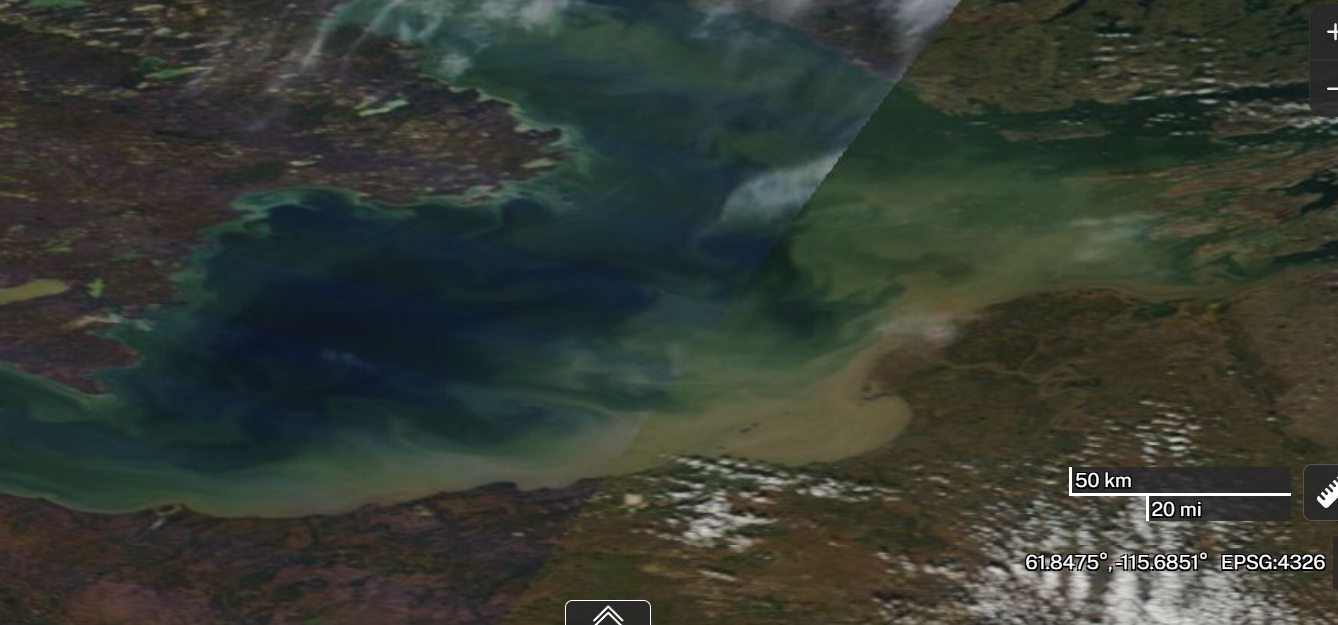
Very Concerned Northerner for the health of the Mackenzie River Basin.
The upper watershed of the Mackenzie River Basin has several significant tributaries, including the Peace, Smoky, McLeod, and Athabasca Rivers. Collectively, these rivers flow northward into Great Slave Lake via the Slave River, contributing an impressive 30% of the total water volume that feeds into the Mackenzie River. This highlights the vital interconnectedness of our water systems, with the Peace and the Athabasca Rivers standing out as Alberta's largest rivers.
We are witnessing decisive advancements in the Upper Peace River with the operation of the Site C hydroelectric project... Continue reading
Very Concerned Northerner for the health of the Mackenzie River Basin.
The upper watershed of the Mackenzie River Basin has several significant tributaries, including the Peace, Smoky, McLeod, and Athabasca Rivers. Collectively, these rivers flow northward into Great Slave Lake via the Slave River, contributing an impressive 30% of the total water volume that feeds into the Mackenzie River. This highlights the vital interconnectedness of our water systems, with the Peace and the Athabasca Rivers standing out as Alberta's largest rivers.
We are witnessing decisive advancements in the Upper Peace River with the operation of the Site C hydroelectric project, and BC is planning for a fourth dam. While these developments undoubtedly alter the seasonal flow dynamics of the rivers, they also represent a significant step forward for green energy in BC, but at the expense of the lower watershed, with water reduction. Additionally, the presence of four pulp mills that discharge effluent into these rivers, combined with coal mines and oil and gas developments in the Montney Basin, requires Canada's attention. It's important to acknowledge that the extraction processes rely heavily on water for hydraulic fracturing, posing a significant impact on the watershed.
In the Athabasca watershed, we face similar environmental pressures, with coal mines near Hinton, pulp mills, and conventional oil and gas operations alongside the ever expanding oil sands industry. The existence of approximately 300 km² of 1.7 billion m3 of toxic wastewater stored on foreign-owned leased sites is concerning and represents a substantial challenge for maintaining a healthy ecosystem. As Alberta moves forward with its plans for oil sands expansion, Canada must address the increased environmental implications head-on.
Furthermore, Alberta's introduction of Bill 7 will enable the transfer of water between watersheds, effectively diminishing the remaining water resources feeding the lower Mackenzie watershed, especially as drought conditions continue to affect various regions within the province and territory.
The low water levels in Great Slave Lake do not allow for sufficient flushing, and sediment and toxins from the Slave River circulate around the lake, dispersing their contents. The west basin of Great Slave Lake has a depth of up to 90 meters, while its outlet to the Mackenzie River remains shallow at -3 meters. This variation is crucial for understanding summer water levels, which, in addition to restricting any flushing, also directly affect access to the Mackenzie River for marine traffic. During the summer months, CCG and the GNWT's tug/barge vessels are increasingly facing navigation challenges after the spring freshet.
For the communities of Hay River and Fort Resolution, which draw their drinking water from the lake, the spring sediment plume from the Slave River was previously a brief event. These increased potentially toxic sediment plumes have become a year-round event due to the suspected leaching from the Oil Sands unlined settling ponds, and the sediment plumes travel directly over the water intakes of these two communities. The resulting health impacts have become very noticeable, including sickness and higher cancer rates, because there is no requirement to test for contaminants and toxins in our drinking water.
From October to February of this past year, our water intake picked up this sediment plume and triggered a THM alert for the 4 month period, resulting in a Boil Water Advisory from the GNWT Health Officer, which does nothing to remove chemicals/toxins from the drinking water.
In summary, while upstream water use is expected to reduce flow into the Slave River and, in turn, into Great Slave Lake, our concern about upstream toxins flowing downstream is valid. The relationship between water flow and toxin management is clear, and without sufficient flow and Alberta's plans to increase oil sands production, these concerns will worsen. It is imperative that Canada takes decisive action to protect our invaluable water resources and the health of downstream communities for future generations.
The impacts on our communities can be seen in the statistics, especially for 2016, after the 670,000 m3 Obed Coal Slurry spill, which drained into the lake during the summer of 2014, and again in 2022, following the Peace Mercer Pulp Mill, which released 30,000 m3 of toxic pulp effluent into the Peace River in April 2021.
. -
The Cooperation Agreement Fails to Address Federal Jurisdiction Oversight in Line with Environmental Laws
by Erika, 7 months ago- Federal Paramountcy: If there is a direct conflict between a valid federal law and a valid provincial law—meaning you cannot comply with both at the same time—the federal law prevails (paramountcy).
- If there are blatant deficiencies in the Provincial Environmental Assessments that unduly imperil land, water, or air and thereby endanger the health of people and the ecosystem, federal environmental laws should prevail and power should be given to the federal government to remedy, as necessary.
- Federal Paramountcy: If there is a direct conflict between a valid federal law and a valid provincial law—meaning you cannot comply with both at the same time—the federal law prevails (paramountcy).
- If there are blatant deficiencies in the Provincial Environmental Assessments that unduly imperil land, water, or air and thereby endanger the health of people and the ecosystem, federal environmental laws should prevail and power should be given to the federal government to remedy, as necessary.
-
Truth and Reconciliation over Trumpland!!!
by Ashley, 7 months agoCanada’s environmental assessment system exists to protect the public interest, uphold Indigenous rights, and ensure that major projects do not compromise the health of ecosystems or communities. The draft Co‑operation Agreement Between Alberta and Canada fails to meet that standard. Instead, it proposes a framework in which the federal government systematically defers to a provincial environmental assessment (EA) regime that is narrower, weaker, and structurally incapable of addressing federal responsibilities.
The agreement repeatedly commits Canada to rely on Alberta’s processes “to address adverse effects within federal jurisdiction” for projects primarily under provincial jurisdiction (Clause 1(1)) and to avoid “duplicative decision‑making”... Continue reading
Canada’s environmental assessment system exists to protect the public interest, uphold Indigenous rights, and ensure that major projects do not compromise the health of ecosystems or communities. The draft Co‑operation Agreement Between Alberta and Canada fails to meet that standard. Instead, it proposes a framework in which the federal government systematically defers to a provincial environmental assessment (EA) regime that is narrower, weaker, and structurally incapable of addressing federal responsibilities.
The agreement repeatedly commits Canada to rely on Alberta’s processes “to address adverse effects within federal jurisdiction” for projects primarily under provincial jurisdiction (Clause 1(1)) and to avoid “duplicative decision‑making” by deferring to Alberta where Alberta asserts it can address federal effects (Clause 3(1)).
This is not cooperation. It is abdication.
1. Alberta’s EA Regime Is Not Equivalent to the Federal Impact Assessment Act
1.1 Alberta’s EA is narrow, project‑focused, and structurally outdated
The federal Impact Assessment Act(IAA) requires assessment of environmental, health, social, economic, climate, and Indigenous‑rights impacts. Alberta’s EA regime, by contrast, is built around a biophysical, project‑by‑project model that does not integrate:
- cumulative effects
- climate obligations
- Indigenous rights
- sustainability
- interjurisdictional impacts
- long‑term ecological thresholds
The federal government cannot credibly claim that Alberta’s process is capable of addressing federal‑effects categories when Alberta’s legislation was never designed to do so.
1.2 Alberta’s cumulative‑effects management is demonstrably insufficient
Alberta’s own land‑use framework acknowledges that project‑by‑project assessment “has not worked as well” for cumulative effects. Regional thresholds remain incomplete or unenforced. Watersheds, airsheds, and wildlife ranges across the province are already over‑allocated. Yet the draft agreement proposes that Canada rely on Alberta’s EA to address cumulative effects within federal jurisdiction (Clause 1(1)).
This is a recipe for continued ecological decline. Alberta is already overdeveloped with little intact land remaining for the practice of rights in a clean and healthy environment.
1.3 Alberta rejects UNDRIP as binding, this agreement entrenches that position
The preamble acknowledges that Canada “maintains its commitment to the United Nations Declaration on the Rights of Indigenous Peoples(UNDRIP),” while Alberta “views UNDRIP as non‑binding”. Despite this fundamental divergence, Clause 7(1) states that Canada will “recognize Alberta as best placed to consult with Indigenous Peoples” for provincially regulated projects. This is unacceptable. A province that rejects UNDRIP cannot be the primary vehicle for upholding federal constitutional and international obligations.
1.4 The Alberta Energy Regulator (AER) is not an independent assessment body
The AER simultaneously:
- regulates oil, gas, and coal development
- promotes resource extraction
- collects royalties
- administers environmental assessment
Additionally, the AER is funding by industry! This is a textbook conflict of interest. No credible environmental assessment system in the world embeds assessment within a pro‑development regulator, yet the draft agreement proposes that federal oversight defer to this structure.
1.5 Alberta’s process lacks transparency and meaningful participation
Compared to the federal system, Alberta’s EA offers:
- fewer public participation opportunities
- limited participant funding
- less accessible documentation
- weaker transparency requirements
Communities and Indigenous Nations already struggle to participate meaningfully in Alberta’s EA. The draft agreement would further reduce their access to federal processes that are more transparent and better resourced.
2. How the Draft Agreement Entrenches These Weaknesses
2.1 Clause 1(1): Systematic federal deference to Alberta
Canada commits to relying on Alberta’s processes to address federal effects for provincially regulated projects. This clause effectively allows Alberta to define the adequacy of its own process, a self‑certification model that undermines federal oversight.
2.2 Clause 3(1): Avoiding “duplicative decision‑making”
This clause is framed as efficiency, but in practice it means federal withdrawal.
Duplication is not the problem. Weak provincial processes are the problem.2.3 Clause 6(1): Federal conditions must defer to provincial conditions
This clause states that where conditions overlap, “federal conditions will defer to provincial conditions and authority” when provincial tools exist. This is an extraordinary concession. It makes the provincial standard the ceiling, not the floor (the Alberta process is indeed the floor), even where federal obligations require stronger protections.
2.4 Clause 7(1): Delegation of Indigenous consultation to Alberta
Canada proposes to rely on Alberta’s consultation processes even though Alberta rejects UNDRIP as binding. This clause would materially weaken the protection of Indigenous rights.
2.5 Clause 5(1): Compressed two‑year timeline
Complex projects with cumulative, interjurisdictional, and rights‑based impacts cannot be meaningfully assessed under rigid timelines, especially when relying on a weaker provincial process.
3. Recommendations
To avoid creating a lowest‑common‑denominator assessment system, the following amendments are essential:
3.1 Remove automatic deference clauses (1(1), 3(1), 6(1), 7(1))
Federal oversight must remain independent, rigorous, and rights‑based.
3.2 Require a formal equivalency analysis before federal reliance
Canada must demonstrate, not assume, that Alberta’s process meets federal standards.
3.3 Protect federal consultation obligations
Canada must retain responsibility for consultation where provincial processes fall short of UNDRIP‑aligned standards. Section 91(24) of the Constitution Act, 1867 gives Canada exclusive jurisdiction over “Indians, and Lands reserved for the Indians,” which includes a constitutional responsibility to ensure that consultation with Indigenous Peoples is meaningful, adequate, and consistent with the honour of the Crown. This duty cannot be delegated in a way that undermines its substance. While Alberta may conduct consultation for provincially regulated projects, Canada must independently ensure that the process meets federal constitutional standards. The draft Co‑operation Agreement’s proposal that Canada “recognize Alberta as best placed to consult” (Clause 7(1)) is inconsistent with Canada’s obligations under s.91(24), particularly given Alberta’s explicit position that UNDRIP is non‑binding. Canada cannot rely on a provincial process that does not share its constitutional commitments.
3.4 Strengthen cumulative‑effects safeguards
Federal assessment must be mandatory in regions with known cumulative stress. Alberta is currently over developed, remediation, reclamation and restoration are not priorities; these activities must keep pace with developments.
3.5 Ensure transparency and independence
Federal reliance should be contingent on minimum standards for transparency, participation, and institutional independence.
Conclusion
The draft Co‑operation Agreement does not strengthen environmental assessment in Canada. It weakens it. It proposes a system in which federal responsibilities are delegated to a provincial regime that lacks the scope, independence, transparency, and rights‑based foundation required to protect the public interest.
Canada must not allow efficiency to become a pretext for lowering standards.
“One project, one review” must mean one robust review, not one that defaults to the weakest available process.I urge the Agency to revise the agreement to ensure that federal responsibilities are upheld, Indigenous rights are protected, and environmental integrity is not compromised.
-
Need for investment for jobs
by Jesse, 7 months agoAs an academic-industry partner, I have learnt from numerous students, professors, international students and industry leaders about the anti energy regulations hindering employment growth. We have hundreds of thousands newcomers coming to canada, but we dont have enough resources jobs or manufacturing jobs. We have jobs like service jobs mostly which are supporting jobs but not the core industry. This regulation will greatly benefit for alberta to grow not only with good jobs but also revenue for government so they can support Healthcare and education.On top of that, we may give some contracts for growth to indigenous communities so... Continue reading
As an academic-industry partner, I have learnt from numerous students, professors, international students and industry leaders about the anti energy regulations hindering employment growth. We have hundreds of thousands newcomers coming to canada, but we dont have enough resources jobs or manufacturing jobs. We have jobs like service jobs mostly which are supporting jobs but not the core industry. This regulation will greatly benefit for alberta to grow not only with good jobs but also revenue for government so they can support Healthcare and education.On top of that, we may give some contracts for growth to indigenous communities so they also reap some of the benefits.
More of MOU and less regulations will eventually improve our growth
-
The Alberta Impact Assessment Process does not match Federal processes
by Melanie Daniels B.Sc., P.Biol., 7 months agoCanada’s environmental assessment system exists to protect the public interest, uphold Indigenous rights, and ensure that major projects do not compromise the health of ecosystems or communities. The draft Co‑operation Agreement Between Alberta and Canada fails to meet that standard. Instead, it proposes a framework in which the federal government systematically defers to a provincial environmental assessment (EA) regime that is narrower, weaker, and structurally incapable of addressing federal responsibilities.
The agreement repeatedly commits Canada to rely on Alberta’s processes “to address adverse effects within federal jurisdiction” for projects primarily under provincial jurisdiction (Clause 1(1)) and to avoid “duplicative decision‑making”... Continue reading
Canada’s environmental assessment system exists to protect the public interest, uphold Indigenous rights, and ensure that major projects do not compromise the health of ecosystems or communities. The draft Co‑operation Agreement Between Alberta and Canada fails to meet that standard. Instead, it proposes a framework in which the federal government systematically defers to a provincial environmental assessment (EA) regime that is narrower, weaker, and structurally incapable of addressing federal responsibilities.
The agreement repeatedly commits Canada to rely on Alberta’s processes “to address adverse effects within federal jurisdiction” for projects primarily under provincial jurisdiction (Clause 1(1)) and to avoid “duplicative decision‑making” by deferring to Alberta where Alberta asserts it can address federal effects (Clause 3(1)).
This is not cooperation. It is abdication.
1. Alberta’s EA Regime Is Not Equivalent to the Federal Impact Assessment Act
1.1 Alberta’s EA is narrow, project‑focused, and structurally outdated
The federal Impact Assessment Act (IAA) requires assessment of environmental, health, social, economic, climate, and Indigenous‑rights impacts. Alberta’s EA regime, by contrast, is built around a biophysical, project‑by‑project model that does not integrate:
- cumulative effects
- climate obligations
- Indigenous rights
- sustainability
- interjurisdictional impacts
- long‑term ecological thresholds
The federal government cannot credibly claim that Alberta’s process is capable of addressing federal‑effects categories when Alberta’s legislation was never designed to do so.
1.2 Alberta’s cumulative‑effects management is demonstrably insufficient
Alberta’s own land‑use framework acknowledges that project‑by‑project assessment “has not worked as well” for cumulative effects. Regional thresholds remain incomplete or unenforced. Watersheds, airsheds, and wildlife ranges across the province are already over‑allocated. Yet the draft agreement proposes that Canada rely on Alberta’s EA to address cumulative effects within federal jurisdiction (Clause 1(1)).
This is a recipe for continued ecological decline. Alberta is already overdeveloped with little intact land remaining for the practice of rights in a clean and healthy environment.
1.3 Alberta rejects UNDRIP as binding, this agreement entrenches that position
The preamble acknowledges that Canada “maintains its commitment to the United Nations Declaration on the Rights of Indigenous Peoples (UNDRIP),” while Alberta “views UNDRIP as non‑binding”. Despite this fundamental divergence, Clause 7(1) states that Canada will “recognize Alberta as best placed to consult with Indigenous Peoples” for provincially regulated projects. This is unacceptable. A province that rejects UNDRIP cannot be the primary vehicle for upholding federal constitutional and international obligations.
1.4 The Alberta Energy Regulator (AER) is not an independent assessment body
The AER simultaneously:
- regulates oil, gas, and coal development
- promotes resource extraction
- collects royalties
- administers environmental assessment
Additionally, the AER is funding by industry! This is a textbook conflict of interest. No credible environmental assessment system in the world embeds assessment within a pro‑development regulator, yet the draft agreement proposes that federal oversight defer to this structure.
1.5 Alberta’s process lacks transparency and meaningful participation
Compared to the federal system, Alberta’s EA offers:
- fewer public participation opportunities
- limited participant funding
- less accessible documentation
- weaker transparency requirements
Communities and Indigenous Nations already struggle to participate meaningfully in Alberta’s EA. The draft agreement would further reduce their access to federal processes that are more transparent and better resourced.
2. How the Draft Agreement Entrenches These Weaknesses
2.1 Clause 1(1): Systematic federal deference to Alberta
Canada commits to relying on Alberta’s processes to address federal effects for provincially regulated projects. This clause effectively allows Alberta to define the adequacy of its own process, a self‑certification model that undermines federal oversight.
2.2 Clause 3(1): Avoiding “duplicative decision‑making”
This clause is framed as efficiency, but in practice it means federal withdrawal.
Duplication is not the problem. Weak provincial processes are the problem.2.3 Clause 6(1): Federal conditions must defer to provincial conditions
This clause states that where conditions overlap, “federal conditions will defer to provincial conditions and authority” when provincial tools exist. This is an extraordinary concession. It makes the provincial standard the ceiling, not the floor (the Alberta process is indeed the floor), even where federal obligations require stronger protections.
2.4 Clause 7(1): Delegation of Indigenous consultation to Alberta
Canada proposes to rely on Alberta’s consultation processes even though Alberta rejects UNDRIP as binding. This clause would materially weaken the protection of Indigenous rights.
2.5 Clause 5(1): Compressed two‑year timeline
Complex projects with cumulative, interjurisdictional, and rights‑based impacts cannot be meaningfully assessed under rigid timelines, especially when relying on a weaker provincial process.
3. Recommendations
To avoid creating a lowest‑common‑denominator assessment system, the following amendments are essential:
3.1 Remove automatic deference clauses (1(1), 3(1), 6(1), 7(1))
Federal oversight must remain independent, rigorous, and rights‑based.
3.2 Require a formal equivalency analysis before federal reliance
Canada must demonstrate, not assume, that Alberta’s process meets federal standards.
3.3 Protect federal consultation obligations
Canada must retain responsibility for consultation where provincial processes fall short of UNDRIP‑aligned standards. Section 91(24) of the Constitution Act, 1867 gives Canada exclusive jurisdiction over “Indians, and Lands reserved for the Indians,” which includes a constitutional responsibility to ensure that consultation with Indigenous Peoples is meaningful, adequate, and consistent with the honour of the Crown. This duty cannot be delegated in a way that undermines its substance. While Alberta may conduct consultation for provincially regulated projects, Canada must independently ensure that the process meets federal constitutional standards. The draft Co‑operation Agreement’s proposal that Canada “recognize Alberta as best placed to consult” (Clause 7(1)) is inconsistent with Canada’s obligations under s.91(24), particularly given Alberta’s explicit position that UNDRIP is non‑binding. Canada cannot rely on a provincial process that does not share its constitutional commitments.
3.4 Strengthen cumulative‑effects safeguards
Federal assessment must be mandatory in regions with known cumulative stress. Alberta is currently over developed, remediation, reclamation and restoration are not priorities; these activities must keep pace with developments.
3.5 Ensure transparency and independence
Federal reliance should be contingent on minimum standards for transparency, participation, and institutional independence.
Conclusion
The draft Co‑operation Agreement does not strengthen environmental assessment in Canada. It weakens it. It proposes a system in which federal responsibilities are delegated to a provincial regime that lacks the scope, independence, transparency, and rights‑based foundation required to protect the public interest.
Canada must not allow efficiency to become a pretext for lowering standards.
“One project, one review” must mean one robust review, not one that defaults to the weakest available process.I urge the Agency to revise the agreement to ensure that federal responsibilities are upheld, Indigenous rights are protected, and environmental integrity is not compromised.
-
Phenomenal achievement
by Von, 7 months agoThis is great news. Alberta needs a way for its own approvals for provincial autonomy. Canada federal and provincial government working together with provincial approval is better for alberta jobs and canada jobs. We need more industrial and buisness investment in Canada to grow, not just small service jobs. Let's stop the big bureaucracy and fasten the approval rate.This is great news. Alberta needs a way for its own approvals for provincial autonomy. Canada federal and provincial government working together with provincial approval is better for alberta jobs and canada jobs. We need more industrial and buisness investment in Canada to grow, not just small service jobs. Let's stop the big bureaucracy and fasten the approval rate. -
Alberta's process is deficient
by Melanie Daniels B.Sc., P.Biol., 7 months agoI am submitting these comments as an Indigenous woman, a Section 35 rights‑holder, and a professional with more than twenty years of experience in Crown–Indigenous consultation, regulatory processes, and Indigenous rights impact assessment. My experience spans provincial, federal, and Indigenous‑governed systems, including direct participation in consultation processes under Alberta’s Consultation Policy and Guidelines as well as Canada’s processes through the Impact Assessment Agency and the Canada Energy Regulator.
After reviewing the Draft Co‑operation Agreement between Alberta and Canada, I have significant concerns that the proposed framework fails to uphold the honour of the Crown, does not meet constitutional standards for... Continue reading
I am submitting these comments as an Indigenous woman, a Section 35 rights‑holder, and a professional with more than twenty years of experience in Crown–Indigenous consultation, regulatory processes, and Indigenous rights impact assessment. My experience spans provincial, federal, and Indigenous‑governed systems, including direct participation in consultation processes under Alberta’s Consultation Policy and Guidelines as well as Canada’s processes through the Impact Assessment Agency and the Canada Energy Regulator.
After reviewing the Draft Co‑operation Agreement between Alberta and Canada, I have significant concerns that the proposed framework fails to uphold the honour of the Crown, does not meet constitutional standards for consultation, and embeds systemic deficiencies present in Alberta’s consultation regime into federal decision‑making. These deficiencies create foreseeable and unacceptable risks to Treaty rights, Métis harvesting rights, Indigenous Knowledge, and the integrity of federal impact assessment.
This submission provides a legal critique of the draft agreement, a comparative analysis with other provincial–federal co‑operation models, and a risk assessment for Indigenous Peoples in Treaty 6, 7, and 8 territories and Métis communities.
I respectfully request that Canada revise the draft agreement to ensure that federal obligations under Section 35, the Impact Assessment Act, and the United Nations Declaration on the Rights of Indigenous Peoples (UNDRIP) are upheld, and that Indigenous Peoples are not placed in a weaker position than they are today. The justification for this request is provided in the following analysis.
Clause 1(1): Federal reliance on Alberta’s processes
“Canada will recognize Alberta as best placed to undertake an assessment… and will rely on Alberta’s environmental assessment or regulatory processes…”
Legal concern:
This clause improperly delegates federal constitutional obligations to a provincial process that is not rights‑based, is proponent‑driven, and does not meet federal standards for consultation or cumulative effects assessment. The federal Crown cannot rely on a provincial process that is structurally incapable of addressing adverse effects within federal jurisdiction.Clause 1(2): Integration of Alberta’s requirements into federal assessments
This clause allows Alberta to shape federal assessments even where federal jurisdiction is clear (e.g., fisheries, species at risk, federal lands).
Legal concern:
This clause risks fettering federal discretion and undermining the independence of federal impact assessment.Clause 3(1): Avoiding duplicative decision‑making
IAAC commits to relying on Alberta’s processes where Alberta “confirms” it can address adverse effects within federal jurisdiction.
Legal concern:
Alberta’s confirmation is not a legal safeguard. Alberta’s consultation system does not require cumulative effects analysis, Indigenous‑led assessment, or rights‑based evaluation. Federal reliance on Alberta’s assurances is insufficient to meet the honour of the Crown.Clause 6(1): Federal conditions will defer to provincial conditions
“Where duplication… has been identified, federal conditions will defer to provincial conditions…”
Legal concern:
This clause is incompatible with federal duties under the Impact Assessment Act. Alberta’s conditions rarely include Indigenous‑specific protections, Indigenous monitoring, or Indigenous Knowledge requirements. Deference to weaker provincial conditions exposes Indigenous rights to harm.Clause 7(1): Delegation of consultation to Alberta
“Canada will recognize Alberta as best placed to consult with Indigenous Peoples pursuant to Alberta’s consultation policies and practices…”
Legal concern:
This is the most problematic clause in the agreement. Alberta’s consultation regime is procedurally narrow, excludes many Métis communities, and treats consultation as a procedural checkbox rather than a rights‑based obligation. Federal delegation to this system is inconsistent with Section 35 jurisprudence and UNDRIP.Clause 7(3): Indigenous‑led assessment
This clause states that nothing prevents Indigenous‑led assessment, but provides no mechanism, funding, or authority.
Legal concern:
This is symbolic only. Without enforceable mechanisms, Indigenous‑led assessment remains theoretical.Clause 8: Indigenous Knowledge
Alberta commits only to receiving Indigenous Knowledge “in accordance with Alberta’s legislation, policies, and practices.”
Legal concern:
Alberta’s policies do not provide adequate protection for Indigenous Knowledge, nor do they align with federal standards or UNDRIP.Clause 10(2): Alberta’s constitutional challenge to the IAA
This clause acknowledges Alberta’s ongoing challenge to the constitutionality of the Impact Assessment Act.
Legal concern:
Canada is entering into a co‑operation agreement with a party that does not accept the constitutionality of the federal statute governing the agreement. This creates legal instability and undermines predictability for Indigenous Nations.Comparative Analysis: Alberta agreement vs. BC vs. Ontario agreements
A. British Columbia
BC’s Environmental Assessment Act includes:
- Indigenous‑led assessment pathways
- Consent‑based decision‑making for participating Indigenous Nations
- Statutory recognition of Indigenous Knowledge
- Shared decision‑making mechanisms
Alberta’s draft agreement contains none of these features. It represents a regression from national best practices.
B. Ontario
Ontario’s federal–provincial co‑operation agreements:
- Do not delegate federal consultation to the province
- Maintain federal independence in decision‑making
- Require federal assessment where federal jurisdiction is engaged
Ontario’s model preserves federal obligations. Alberta’s model attempts to offload them.
C. Alberta
Alberta’s consultation system:
- Is proponent‑driven
- Excludes many Métis communities
- Does not require cumulative effects assessment
- Does not incorporate UNDRIP
- Treats consultation as procedural, not substantive
- Does not apply conditions designed to protect Indigenous Rights
- Does not allow for Indigenous monitoring, oversight or guardianship
Conclusion:
The Alberta draft agreement is the weakest of the three models and exposes Indigenous Peoples to the greatest risk.Risk identification for Treaty 6, 7, 8 First Nations and Métis Communities
A. Treaty Rights
- Loss of federal oversight risks erosion of hunting, fishing, trapping, and gathering rights.
- Alberta’s system does not assess cumulative effects on Treaty rights.
- Poses great risk to Canada and Alberta considering the Yehay v. British Columbia and the soon to be heard Beaver Lake v. Canada and Alberta case.
B. Water Security
- Alberta’s regulatory system does not require Indigenous‑led water monitoring.
- Federal deference to Alberta risks inadequate protection of major watersheds.
C. Wildlife and Habitat
- Alberta’s fragmented land‑use planning and weak species‑at‑risk protections create foreseeable impacts on caribou, moose, bear, beaver and other culturally significant species.
D. Métis Rights
- Alberta’s consultation regime excludes many Métis communities and Settlements.
- Delegation to Alberta risks violating Métis harvesting rights.
E. Indigenous Knowledge
- Alberta’s policies do not meet federal standards for protection, confidentiality, or governance of Indigenous Knowledge.
- Alberta has no requirement to include let alone consider Indigenous Knowledge, most environmental impact assessments conducted under Alberta’s Environmental Protection and Enhancement Act are mute on Indigenous Knowledge.
F. Cumulative Effects
- Alberta does not require cumulative effects assessment. Current mapping exercised conducted by First Nations have indicated that Alberta has less than 9% of intact lands on which Indigenous Rights can be practiced in a safe and healthy manner.
- Federal reliance on Alberta’s processes will result in incomplete assessments of long‑term impacts.
Canada must uphold its Treaty, fiduciary and statutory obligations while upholding the Honour of the Crown, this Agreement does not achieve these obligations. I am hopeful that Canada will revisit this agreement. Consider this Agreement considering Chief Laurie Carr’s, Hiawatha First Nation, open letter to Prime Minister Carney when reviewing this submission.

-
 Public Submissions
-
 ACEC and CEA Submission - Canada-Alberta Impact Assessment Cooperation Agreement.pdf (187 KB) (pdf)
-
ACFN to IAAC re Submissions on the Draft Canada-Alberta Co-operation Agreement.pdf (841 KB) (pdf)
-
Alberta Wilderness Association - Concerns on draft Alberta Agreement - March 12 2026.pdf (244 KB) (pdf)
-
Brian Free - Notes re Canada-AB draft agreement on impact assessment.docx (15.8 KB) (docx)
-
Business Council of Alberta - Official Submission_AB-CA IAA Draft Cooperation Agreement.pdf (221 KB) (pdf)
-
Capital Power Comment - AB-Canada Cooperation Agreement.pdf (177 KB) (pdf)
-
CAPP comments with appendix on Alberta co-operation agreement .pdf (1.03 MB) (pdf)
-
Cold Lake First Nations - Comments on Draft Can-AB Agt - March 27 2025.pdf (4.49 MB) (pdf)
-
Confederacy of Treaty Six First Nations Submission - AB Co-Op Agreement.pdf (3.46 MB) (pdf)
-
Deniene Patriquin - Safeguards for Effective Canada.pdf (78.7 KB) (pdf)
-
DFN to Minister Dabrusin (ECCC) and President Hubbard (IAAC) - Canada-AB Draft Co-operation Agreement (1).docx (155 KB) (docx)
-
Fort Chipewyan Metis Nation (FCMN) - Comments on AB Agreement (276 KB) (pdf)
-
FNMPC_Engagement Response_AB Bilateral Agreement_v2 -final.pdf (368 KB) (pdf)
-
Frog Lake Cree Nation - Submission on Alberta-Canada Cooperation Agreement - March 26_ 2026.pdf (225 KB) (pdf)
-
Gail_Fox.PDF (30.3 KB) (PDF)
-
GNWT comments on the draft AB-Canada EA-IA Co-operation Agreement - Mar 26 2026.pdf (618 KB) (pdf)
-
Intact_Lands_in_Alberta_-_2023-12-12_-_Apropos.pdf (292 KB) (pdf)
-
Jane McQuitty - One process one project.docx (14.1 KB) (docx)
-
LMN Comments on Cooperation Agreement March 2026.pdf (161 KB) (pdf)
-
McMurrayMetis-Review-Draft-AB-Canada-Coop-Agreement-Mar27-2026.pdf (292 KB) (pdf)
-
MFN - Re- The Draft Co-operation Agreement between Alberta and Canada on Environmental and Impact Assessment.pdf (149 KB) (pdf)
-
MIkisew Cree First Nation - Comments on Draft Can-AB Agt - March 27 2025.pdf (4.67 MB) (pdf)
-
Mining Association of Canada (MAC) - Mar 27 2026.pdf (138 KB) (pdf)
-
Nigel Bankes ABlawg comments on the Alberta Canada draft cooperation agreement.pdf (370 KB) (pdf)
-
No CO2 Piplines AB - Letter to IAAC and ECCC.pdf (1.6 MB) (pdf)
-
OCFN Comments on Draft Co Op Agreement Canada and Alberta.pdf (144 KB) (pdf)
-
Oil Sands Alliance submission Impact Assessment CoOp Agreement March 2026.pdf (182 KB) (pdf)
-
PRI Consultation Response to IAAC_s Draft Cooperation Agreeement.pdf (863 KB) (pdf)
-
Sturgeon Lake Cree Nation - Comments on Draft Can-AB Agt - March 27 2025.pdf (11.3 MB) (pdf)
-
Suncor Response to Draft Cooperation Agreement.pdf (166 KB) (pdf)
-
Tourmaline - Comments on Alberta Agreement - 27 March 2026.pdf (3.95 MB) (pdf)
-
William Turner - Submission on the Draft Co-operation Agreement on Environmental and Impact Assessment between Alberta and Canada.pdf (89.7 KB) (pdf)
-
-
Public Comments
-
2026-03-27 - Whitefish Lake 128 First Nation Submission on Alberta-Canada Cooperation Agreement.pdf (273 KB) (pdf)
-
2026-03-27 - Blood Tribe_Kainai Submission on Alberta-Canada Cooperation Agreement.pdf (269 KB) (pdf)
-
2026-03-27 - Siksika Nation Submission on Alberta-Canada Cooperation Agreement.pdf (268 KB) (pdf)
-
2026-03-27 - Ermineskin Cree Nation Submission on Alberta-Canada Cooperation Agreement.pdf (270 KB) (pdf)
-
Open
Co-operation Agreement between Alberta and Canada has finished this stageThe draft co-operation agreement with Alberta is open for public comments.
-
Under Review
Co-operation Agreement between Alberta and Canada has finished this stageThe draft co-operation agreement with Alberta is closed for public comments.
-
Final Agreement
Co-operation Agreement between Alberta and Canada is currently at this stageFinal co-operation agreement with Alberta is published.